Preserving Beauty: Lucia Scalisi’s Quiet Magic in Art Conservation
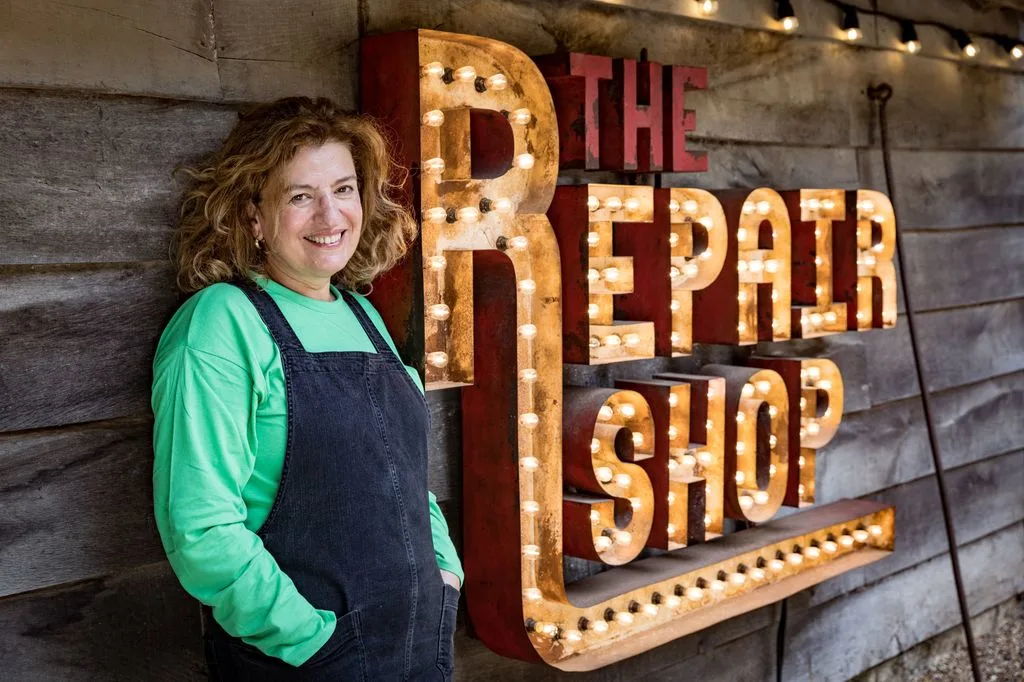
In the soft glow of a London studio, a painting rests on an easel — its once-bright colours dulled by time and dust. The air smells faintly of varnish and old wood. Standing beside it, steady and calm, is Lucia Scalisi, a conservator whose hands know exactly where to begin. She leans close, examines the cracks, studies the paint’s surface under magnification, and begins the slow, careful process of bringing history back to life.
Lucia Scalisi is best known to the public as the painting expert on the BBC’s beloved series The Repair Shop, but her story goes far beyond television. Her work embodies patience, respect, and devotion — qualities that have defined her career for more than three decades. She doesn’t just fix paintings; she preserves beauty — quietly, authentically, and with deep humanity.
Early Inspirations and Artistic Roots
Born in the United Kingdom to a family of Italian heritage, Lucia’s connection to art and culture began early. While she has kept her private life largely out of public view, her professional path reveals a lifelong fascination with the intersection of art and science. She studied Fine Art Conservation at the University of Northumbria (formerly Gateshead Technical College), where she earned her Diploma in the Conservation of Easel Paintings, and also completed a 2:1 Honours degree from the University of Sheffield.
These years of training gave Lucia the scientific foundation and ethical framework that would guide her throughout her career. Conservation, as she learned, is not about repainting or reinventing — it is about understanding. Each pigment, crack, and layer tells a story of time and touch. Her Italian roots may have given her an instinct for beauty; her British discipline gave her the tools to protect it.
From Museum Halls to Master Conservator
Lucia Scalisi began her professional journey in 1984 at the Victoria and Albert Museum (V&A) in London, one of the world’s leading institutions for art and design. Over eleven years, she honed her craft as Senior Conservator of Paintings, working on pieces that spanned centuries and styles. The V&A’s environment — a blend of art history, science labs, and curatorial scholarship — shaped her understanding of conservation as a dialogue between the past and the present.
After her time at the museum, Lucia established her own private conservation studio in London, offering services to galleries, collectors, and historic institutions. Her reputation quickly grew within professional circles for her meticulous approach and technical knowledge. Beyond her London studio, she lent her expertise internationally — in India, Egypt, and Beirut — collaborating on projects to restore significant cultural artworks.
Her global portfolio includes serving as Chief Restorer for the Calcutta Tercentenary Trust at the Victoria Memorial Hall in Kolkata, India, and teaching at the Academy of Conservation in Tbilisi, Georgia. These experiences strengthened her belief that conservation transcends geography; art belongs to humanity as a whole.
The Repair Shop: Bringing Conservation to the Public
When Lucia joined the BBC’s The Repair Shop in 2017, she brought with her not only decades of experience but also an authenticity that viewers immediately connected with. In a show filled with skilled craftspeople and touching stories, she stood out for her calm professionalism and quiet empathy. Each episode shows her working patiently on damaged paintings — portraits, landscapes, heirlooms — each carrying a personal history.
Unlike many TV experts, Lucia rarely seeks attention. She focuses on the painting, not the camera. When she listens to families describe their memories, her responses are gentle but precise. She explains the process in clear, human language: why a pigment darkened, how to lift old varnish, how to respect the artist’s original hand.
Lucia has been clear about how she sees her title: she prefers to be called a “Conservator” rather than a “Restorer.” The distinction matters deeply. A restorer might be tempted to make something look “new.” A conservator, by contrast, aims to protect the integrity of the original — flaws and all. Her philosophy has helped millions of viewers appreciate what true conservation involves: not just skill, but humility.
The Philosophy Behind Her Work
Lucia’s philosophy rests on a simple principle — do less. This does not mean doing less work, but rather taking only the actions necessary to stabilize and preserve. Over-cleaning or over-painting can destroy the very soul of a piece. “The bottom line,” she once explained in an interview, “is to maintain the integrity of the object and the artist’s original intentions, not your own ego.”
Her work blends science and art. She uses reversible materials — such as conservation-grade adhesives and varnishes like Paraloid B-72 — ensuring that any intervention can be undone in the future. Every step is documented with precision. Lucia follows international conservation standards but adds something not found in textbooks: empathy. She treats each painting as a living document, one that carries traces of time, hands, and emotions.
Her approach shows that conservation is not about perfection — it’s about continuity. Each painting she touches continues to tell its story, unbroken, to those who come after.
A Day in Lucia Scalisi’s Studio
Step into Lucia’s studio and you might be struck first by the quiet. Natural light pours through tall windows; the scent of linseed oil, pigment, and aged canvas fills the air. Brushes rest in neat rows beside small glass jars of varnish and solvents. There’s a microscope on one side, a painting on another, and a conservator’s calm presence in between.
Her day begins with examination — studying the painting’s structure, its damages, and the previous restoration attempts. She notes every crack, every patch of loss, every trace of dust. Cleaning is never rushed. Sometimes it takes hours to remove a single layer of dirt without disturbing the paint beneath. Then comes consolidation: stabilizing flaking paint, mending tears, and preparing for retouching using pigments matched to the original tones.
Each movement is deliberate. Each decision, ethical. Lucia knows that what she leaves untouched is as important as what she restores. “In conservation,” she often reminds her students, “you are one of many hands that will care for this object over time.” That awareness — of working within a chain of stewardship — defines her professionalism.
Teaching, Mentoring, and Global Work
Beyond her studio, Lucia Scalisi has been a lecturer in conservation studies at several institutions, including City & Guilds of London Art School, where she has shared her knowledge with new generations of conservators. Her international teaching in Georgia and consultancy projects in India and Egypt have contributed to strengthening conservation standards worldwide.
Her work abroad often involves more than technical repair. It means building local expertise, empowering museums, and helping communities reconnect with their cultural heritage. Whether restoring a British family’s portrait or an Indian historical painting, her motivation remains the same — to honour the story behind the surface.
Through her efforts, she has become an advocate for the importance of cultural preservation in a fast-changing world. She reminds us that art is not a luxury — it is a record of who we are.
Legacy and the Future of Conservation
Lucia’s legacy lies in her integrity and influence. At a time when quick fixes and cosmetic makeovers dominate so much of media, her work stands as a quiet counterpoint. She shows that care is an art form in itself — one that requires patience, humility, and devotion to truth.
Her visibility on The Repair Shop has inspired a new generation to consider careers in conservation. Young artists and technicians now see the beauty in the unseen — the invisible craftsmanship that allows history to survive. She is proof that the slow, careful professions still have immense value in a hurried world.
As the climate crisis, pollution, and modern materials challenge conservation methods, Lucia’s approach — grounded in respect for the original and an understanding of long-term preservation — becomes even more relevant. She stands as both practitioner and teacher, bridging past and future through the steady rhythm of her brush.
Also Read: The Quiet Influence of Damian Schnabel in Branding and Design
The Gentle Power of Care
Lucia Scalisi’s story reminds us that beauty doesn’t always need to be created; sometimes it needs to be protected. Her work, whether in a museum lab or on The Repair Shop, embodies quiet devotion. Each painting that passes through her hands gains a second life, not because it’s made perfect, but because it’s made whole again.
When an owner sees their restored painting for the first time, the emotion in the room is unmistakable. Tears often fall — not from surprise, but from recognition. They see their family’s history, their heritage, shining once more. Lucia often steps back quietly at these moments, letting the art speak for itself.
In her gentle precision, we find something profoundly human. In her patience, we see an artist who listens as much as she works. And in her philosophy — “do less, respect more” — lies a timeless lesson for us all. The act of preserving beauty, as Lucia Scalisi proves, is an act of love: one that keeps our shared history alive, brushstroke by brushstroke.
FAQs
1. Who is Lucia Scalisi?
Lucia Scalisi is a highly respected British conservator of paintings, best known for her role as the painting expert on BBC’s The Repair Shop. With over three decades of experience, she specializes in preserving and restoring artworks while maintaining their original character and history.
2. What is Lucia Scalisi’s background in art conservation?
Lucia trained at the University of Northumbria, earning a Diploma in the Conservation of Easel Paintings, and holds a degree from the University of Sheffield. She began her career at the Victoria and Albert Museum and later founded her own private conservation studio in London.
3. What makes Lucia Scalisi’s approach to restoration unique?
Her philosophy is centered on “doing less” — preserving rather than reinventing. Lucia focuses on stabilizing and protecting each painting so the artist’s intent and the work’s natural aging remain visible. Her restorations are subtle, ethical, and deeply respectful of history.
4. How did Lucia Scalisi become part of The Repair Shop?
Lucia joined the show in 2017 as the resident painting conservator. Her calm demeanor, technical mastery, and sensitivity quickly made her a fan favorite. She uses her expertise to restore cherished family heirlooms while explaining the art of conservation to viewers.
5. What can we learn from Lucia Scalisi’s work?
Through her craft, Lucia teaches the value of patience, authenticity, and care. Her work reminds us that beauty isn’t only found in what’s new, but in what we take the time to protect — a lesson that extends beyond art into everyday life.













Post Comment